
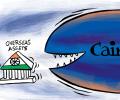
Finance Minister Nirmala Sitharaman on Friday indicated the government's intent to appeal against an arbitration panel asking India to return USD 1.4 billion to UK's Cairn Energy Plc, saying it is her "duty" to appeal in cases where the nation's sovereign authority to tax is questioned.

The government will settle almost all the retrospective tax cases this month, closing a chapter that plagued India's reputation as an investment-friendly destination, a top official said on Friday. A 2012 amendment that gave taxmen powers to go back 50 years and slap capital gains levies wherever ownership had changed hands overseas but business assets were in India, was used to raise Rs 1.1 lakh crore demand against multi-nationals such as telecom group Vodafone, pharmaceuticals company Sanofi and brewer SABMiller, now owned by AB InBev, and Cairn Energy Plc. Such demands brought uncertainty in the minds of investors.

The high court court on Thursday accepted Nokia's appeal to release its local factory after its seizure by authorities in a tax dispute, removing a hurdle for the sale of the company's mobile phone business to Microsoft.
.jpg)
The Indian government has paid Cairn Energy Plc Rs 7,900 crore to refund taxes it had collected to enforce a retrospective tax demand, ending a seven-year-old dispute that had tarred the country's image as an investment destination. The company, which is now known as Capricorn Energy PLC, in a statement said it has received "net proceeds of $1.06 billion", of which nearly 70 per cent will be returned to the shareholders. The tax department had used a 2012 legislation, which gave it powers to go back 50 years and slap capital gains levies wherever ownership had changed hands overseas but business assets were in India, to seek Rs 10,247 crore in taxes from Cairn.

At $12-bn valuation, this will be India's largest FDI; deal to be announced on Saturday, says Dev Chatterjee.

Top Indian private sector lender ICICI Bank, which owns nearly 68 percent of the insurer, is selling up to 181.34 million shares in the IPO.

Courts in five countries including the US and the UK have given recognition to an arbitration award that asked India to return $1.4 billion to Cairn Energy plc - a step that now opens the possibility of the British firm seizing Indian assets in those countries if New Delhi does not pay, sources said. Cairn Energy had moved courts in nine countries to enforce its $1.4 billion arbitral award against India, which the company won after a dispute with the country's revenue authority over a retroactively applied capital gains tax. Of these, the December 21 award from a three-member tribunal at the Permanent Court of Arbitration in the Netherlands has been recognised and confirmed by courts in the US, the UK, Netherlands, Canada and France, three people with knowledge of the matter said.

Cairn joins a slew of multinational firms including Vodafone Group Plc and Royal Dutch Shell Plc that have been slapped with retrospective tax demands by Indian authorities.

AG is of the view that there is no point in dragging the matter further when it has already been "struck down" by one international forum, and also by the top Indian court.

Britain's Cairn Energy Plc has dropped lawsuits against the Indian government and its entities in the US and other places and is in the final stages of withdrawing cases in Paris and the Netherlands to get back about Rs 7,900 crore that were collected from it to enforce a retrospective tax demand. As part of the settlement reached with the government to the seven-year old dispute over levy of back taxes, the company - which is now known as Capricorn Energy PLC - has initiated proceedings to withdraw lawsuits it had filed in several jurisdictions to enforce an international arbitration award which had overturned levy of Rs 10,247 crore retrospective taxes and ordered India to refund the money already collected. Two sources with direct knowledge of the matter said Cairn on November 26 withdrew the lawsuit it had brought in Mauritius for recognition of the arbitration award and took similar measures in courts in Singapore, the UK and Canada.

Arun Sarin is the chief executive officer of Vodafone Group Plc, the United Kingdom-based global mobile operator.
UK-based Cairn Energy PLC on Tuesday said it will drop litigations to seize Indian properties in countries ranging from France to the US, within a couple of days of getting a USD 1 billion refund resulting from the scrapping of a retrospective tax law.
The government on Thursday brought a bill in the Lok Sabha to withdraw all back tax demands on companies such as Cairn Energy and Vodafone and said it will refund the money collected to enforce such levies.
Moving quickly towards ending a retrospective tax dispute with a firm that gave India its largest oilfield, the government has accepted Cairn Energy PLC's undertakings which would allow for the refund of taxes, sources said. Meeting the requirements of the new legislation that scraps levy of retrospective taxation, the company had earlier this month given required undertakings indemnifying the Indian government against future claims as well as agreeing to drop any legal proceedings anywhere in the world. The government has now accepted this and issued Cairn a so-called Form-II, committing to refund the tax collected to enforce the retrospective tax demand, two sources with direct knowledge of the development said.
UK-based Cairn Energy PLC on Wednesday said it has agreed to drop litigations to seize Indian properties in countries ranging from France to the UK as it has accepted the Indian government's offer to settle tax dispute relating to the levy of taxes retrospectively. Meeting the requirements of new legislation that scraps levy of retrospective taxation, the company has given required undertakings indemnifying the Indian government against future claims as well as agreeing to drop any legal proceedings anywhere in the world. The government now has to accept this and issue Cairn a so-called Form-II, that will commit it to refund the tax collected to enforce the retrospective tax demand.
The levy of retrospective tax on the UK's Cairn Energy Plc is a tale of bizarre twists and turns that saw its attached shares being sold in May 2018 amid the passing of the baton from a full-time finance minister to interim one and the talks at the highest level to resolve the dispute, to claims that levy of back taxes was a result of an investigation into Panama Papers leak. The government late last month refunded about Rs 7,900 crore it had collected from selling residual shares of the British firm in its erstwhile India unit, seizing dividend and withholding tax refunds, to settle an eight-year-old dispute that had tarred the country's reputation as an investment destination. But, this did not come about easily. For seven years, the establishment vehemently justified in courts and outside seeking of Rs 10,247 crore in back taxes plus interest and penalty from a firm that gave India its biggest onshore oil discovery.

India's tax authorities began investigating Cadbury in 2011.
Faced with prospect of its assets across the globe being seized just like Pakistan and Venezuela, the government decided to scrap retrospective taxation but the international embarrassment could have been avoided had 'attached' shares of Britain's Cairn Energy Plc not been sold, according to tax and legal experts. On Thursday, the government introduced a Bill in Parliament to scrap the tax rule that gave the tax department power to go 50 years back and slap capital gains levies wherever ownership had changed hands overseas but business assets were in India. The 2012 legislation was used to levy a cumulative of Rs 1.10 lakh crore of tax on 17 entities, including UK telecom giant Vodafone, but substantial punitive action was taken only in the case of Cairn.

Transfer pricing tax orders of Income Tax against Shell and Vodafone pertain to alleged undervaluation of shares issued by their domestic subsidiaries to the parent companies abroad.

While UK's Vodafone Group fights its tax liability in courts, British firm Cairn Energy Plc on Wednesday said it will pay all taxes due, both in India and the United Kingdom, on the $8.48 billion sale of a majority stake in its Indian arm to Vedanta Resources.

A senior company executive said the company waited for seven years for the verdict and its shareholders needed to know when it would be concluded.

US-based technology major IBM is contesting a claim of the revenue department which has increased the company's taxable income substantially to around Rs 11,000 crore (Rs 110 billion).

The move came as the country badly needs capital inflows as the rupee comes under pressure

Sachin Bansal, who had co-founded Flipkart with Binny Bansal in 2007, would exit the company
The bill to nullify retrospective taxation offers a fair solution within the framework of Indian law and Parliamentary sovereignty to companies which have been subjected to such demands, Finance Secretary T V Somanathan said on Thursday. Finance Minister Nirmala Sitharaman introduced 'The Taxation Laws (Amendment) Bill, 2021' in the Lok Sabha that seeks to withdraw tax demands made using a 2012 retrospective legislation to tax the indirect transfer of Indian assets. The Bill provides for the withdrawal of tax demand made on "indirect transfer of Indian assets if the transaction was undertaken before May 28, 2012 (i.e. the day the retrospective tax legislation came into being)."

More companies with unconventional business models to get into messy legal hassles in India.

Together, the top 10 business groups reported a pre-tax loss of Rs 19,342 crore during the January-March 2020 quarter, as against a profit before tax of around Rs 48,500 crore in the year-ago period and Rs 39,600 crore during the December quarter. While Vedanta was the worst hit. others included Aditya Birla, Bharti, Adani, Mahindra, and Tata.

CBDT circular issued last month had raised multiple taxation concerns.

The partially convertible rupee ended at 62.2825/2925 per dollar.

Investor lobbies and tax lawyers estimate the bill for international funds and banks could be as high as $8 billion

The latest deal would give Facebook deeper access to India, the second largest internet market after China.

It is the second firm to have received retrospective tax notice this year after Vodafone Group.

Some investors have questioned whether James is less attached to some parts of the media empire that his father built

The entry of the deep-pocketed conglomerate is expected to heighten competition.

Database to contain taxable financial transactions and history of any tax-paying individual.

Sensex climbs higher at close, bluechip stocks in focus.

The company will wait for sizeable user base for better valuation.
 © 2026 Rediff.com - Advertise with us - Disclaimer - Privacy Policy - Sitemap - Feedback - About us - Terms of use - Grievances